Disaster preparedness is part of choosing a home in Tokyo. Before signing a lease or buying a property, check the hazards at the exact address, the building's condition and the practical needs of your household. After moving in, prepare for several days when electricity, water, toilets or elevators may be unavailable, even if the building itself remains standing.
This English guide draws on the Tokyo Metropolitan Government's Disaster Preparedness Tokyo, 2023 revised edition, with a focus on renters, buyers, students and families moving to Tokyo. Printed page numbers below refer to that edition. For an actual emergency, use current municipal instructions and official warnings; this article is a preparation guide, not a live emergency bulletin.
Start with the address, not a reputation for a “safe area”
A ward name or station name is too broad to describe one home's risk. The handbook asks residents to understand local ground conditions, topography and past disasters, and to consult municipal hazard maps (pp. 34–35, 62 and 152–153). Two properties in the same neighborhood can call for different preparations.
Check the relevant maps separately: river flooding, inland flooding from heavy rain, storm surge and landslide hazards are different questions. Read the legend and the predicted depth at the property, then look beyond the front door to the route from home, the nearest station and the planned evacuation destination. A blank area on one map does not establish that a property is free from every hazard.
The official Tokyo Stockpiling Navi hazard-map directory is a useful starting point for finding municipal information, including Itabashi, Toshima, Nerima and Kita. Check the municipality's latest map and notices rather than relying on an old listing screenshot.
A building can remain standing while daily life stops
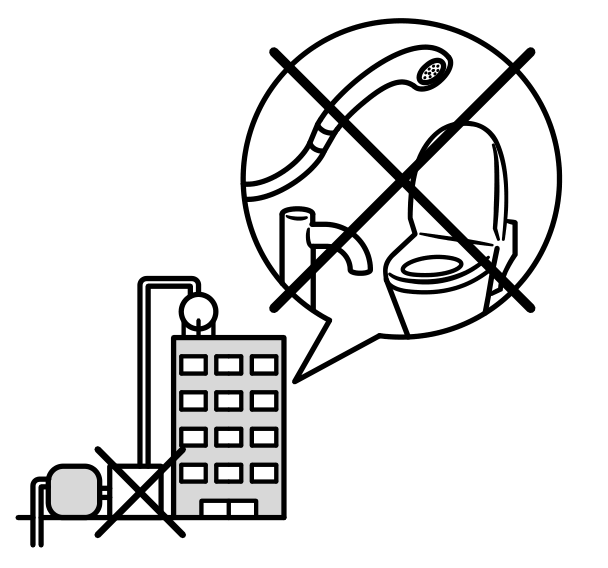
Tokyo's handbook distinguishes a condominium's structural strengths from the services residents depend on (pp. 66–69). Elevators may stop, water pumps may lose power and drainage pipes may be damaged. High-rise residents also need to prepare for long-period ground motion, which can produce substantial swaying and move unsecured furniture.
For a detached house, ask about the structure, applicable seismic standard, maintenance and any available assessment or reinforcement records. The handbook also highlights roof and wall condition and termite damage (pp. 35 and 76–79). A construction year is a useful starting question; it is not a substitute for assessing the actual building.
These are questions to investigate, not a pass-or-fail safety certificate. Building-specific structural questions should be assessed by an appropriate qualified professional. For buyers, keep this checklist alongside the other due-diligence steps in our guide to buying property in Japan.
Make the room safer before filling it with furniture
Room layout is something you can improve immediately. The handbook recommends keeping doorways and corridors clear, storing heavy objects low and considering where furniture or glass could fall (pp. 44–51). Keep the sleeping area and the route to the exit free from furniture that could topple across them. Keep a light and essential items such as glasses within reach at night.
In a rental home, discuss furniture-securing methods with the landlord or management company before drilling. Suitability depends on the furniture, wall and ceiling construction, and correct installation. Non-drilling products are not interchangeable with properly fixed brackets in every situation; follow the product instructions and check the fittings regularly.
Locate the emergency stairs and any designated balcony escape route. Keep access to escape partitions and evacuation hatches clear, following the building's instructions. Ask management to explain the route before you need it, particularly if the notices are only in Japanese.
Prepare for living at home without normal utilities
Tokyo recommends everyday stockpiling: keep extra quantities of the food and daily essentials you already use, rotate them and replace what you consume. The current Tokyo Stockpiling Navi guidance says to start with at least three days and plan for one week and beyond. A household's needs depend on its residents and home; an emergency bag for leaving and supplies for staying serve different purposes.
A simple water calculation
The handbook uses 3 litres per person per day as a planning figure (p. 37). Applying that figure gives the quantities below. These are calculated examples, not a guarantee of sufficiency for every person or every use of water.
Allow separately for additional needs, including pets and hygiene. Water is heavy: choose storage that does not obstruct exits, and consider how you would obtain more if elevators were out of service.
Food is only one part of the supply list
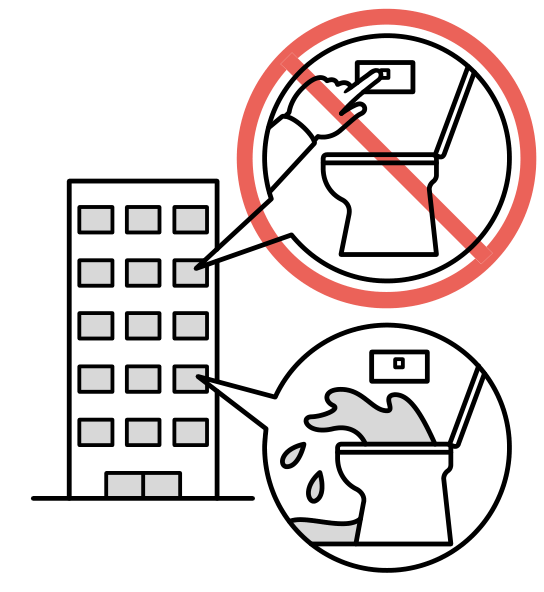
This is a condensed checklist adapted from pp. 38–43, not the complete official inventory. Use Tokyo Stockpiling Navi to tailor quantities to your household. Follow the portable toilet product's directions and your municipality's waste instructions. Never improvise by flushing when the building has not confirmed that its drainage is usable.
Plan for the hazard, not simply the nearest school
The handbook distinguishes a place to escape immediate danger from a place where people can live temporarily after their home becomes uninhabitable (pp. 110–119). The same place is not necessarily suitable for every disaster. Confirm the municipality's designation for the particular hazard, how to reach it and whether it is open when needed.
For an earthquake, protect yourself during the shaking. Once it stops, check for injuries and immediate dangers, obtain official information and follow the appropriate evacuation instructions. Do not treat “the building is still standing” as confirmation that it is safe to remain. Fire, structural damage, tsunami or landslide danger can require urgent action. Do not use elevators to evacuate after an earthquake.
Typhoons and heavy rain call for advance planning. The handbook's “My Timeline” approach means deciding beforehand what information to monitor, what to prepare and when to leave (pp. 152–159). People who need assistance may need more time. Follow current municipal evacuation information and Japan Meteorological Agency warnings and risk maps; do not wait for water to reach the doorway before thinking about a route. If the route has already become dangerous, follow official emergency guidance rather than attempting to cross floodwater.
If you are away when a major earthquake occurs, avoid rushing across the city without knowing whether the journey is safe. Learn the school or workplace plan and agree how household members will contact each other if trains and mobile communications are disrupted (pp. 120–123).
Use the first week after moving to make a household plan
Students living alone and families moving from overseas may be learning both the building and the local warning system at the same time. A short plan is easier to use than a collection of unfamiliar links. Asiascape suggests working through these tasks together:
- Save the full home address in Japanese and English, the management contact and the relevant municipal disaster-information page.
- Check the local hazard maps, identify suitable evacuation destinations and walk the planned routes in normal, safe conditions.
- Locate stairs, exits and designated escape equipment; ask how building announcements and post-earthquake checks will be communicated.
- Set up furniture safely and buy the first supply of water, suitable food, portable toilets and lighting.
- Agree on a contact method and backup meeting plan with household members or family overseas, including what to do if calls do not connect.
- Review support needs, medicines, dietary requirements and arrangements for children or pets before a disruption occurs.
For a student's move, discuss these preparations alongside commute, rent, initial costs and rental screening. Our Student Housing in Japan guide for parents covers those housing decisions. For neighborhood context, see our guide to living in Itabashi.
Official sources and how this guide uses them
The main source is the Tokyo Metropolitan Government's 2023 revised handbook. This article selects material relevant to housing and adds Asiascape's viewing questions and move-in checklist. It does not reproduce the handbook's historical casualty or damage projections as current forecasts. It is an independent article, not a Tokyo Metropolitan Government publication or endorsement.
- Disaster Preparedness Tokyo — English, 2023 revised edition (PDF): housing types, pp. 34–35; supplies and toilets, pp. 36–43; room safety, pp. 44–51; condominium preparedness, pp. 66–75; seismic checks, pp. 76–79; evacuation and sheltering, pp. 108–123; hazard maps and weather preparation, pp. 152–159.
- Tokyo Stockpiling Navi: municipal hazard-map directory: find the relevant municipality, then check its latest maps and notices.
- Tokyo Stockpiling Navi: why stockpiling matters and household planning tool: current stockpiling guidance and a way to tailor the list.
- Japan Meteorological Agency: English weather, earthquake and tsunami information: official warnings and information for current conditions.
Source links and the stockpiling guidance were checked on 8 October 2026. Hazard maps, warnings and local arrangements can change. Recheck them for your address and follow official instructions during an emergency.
FAQ
Frequently asked questions
How do I check disaster risks before renting or buying a home in Tokyo?
Start with the exact address on the municipality's current hazard maps, checking the relevant flood, storm-surge and landslide information separately. Then review the building's seismic information, maintenance and evacuation routes. Ask how water, toilets and access would work if electricity or elevators stopped. A neighborhood name, building age or floor number cannot answer all of these questions.
Should I always go to an evacuation center after an earthquake in Tokyo?
No. Tokyo's handbook describes sheltering at home as an option when the home and its surroundings are safe and the household can live there. This does not override an evacuation order or an immediate threat such as fire, tsunami, landslide or structural damage. Follow local instructions and seek appropriate assistance if safety is uncertain or your household cannot manage at home.
How much emergency water should I keep at home?
The 2023 Disaster Preparedness Tokyo handbook uses 3 litres per person per day as a planning figure. That is 9 litres for one person for three days or 21 litres for one week; two people need 18 or 42 litres respectively. This calculation does not cover every household need. Tokyo's current Stockpiling Navi guidance recommends starting with at least three days and planning for one week and beyond, tailored to the household.
Is a high-floor apartment automatically safer during a disaster?
A floor above a mapped flood depth is only one part of the assessment. Access routes and shared equipment can still be affected, while an earthquake or power outage can stop elevators and water pumps. Consider emergency stairs, the household's ability to use them, stored supplies and the building's response plan alongside the address-specific hazards.
Can I flush the toilet after a major earthquake if water is still available?
Do not assume that having water means the drainage pipes are safe. The Tokyo handbook warns that damaged pipes can cause sewage to leak into lower floors. In an apartment building, wait for the administrator's confirmation that flushing is permitted and follow the building's instructions. Keep portable toilet supplies available in advance.